Handwriting
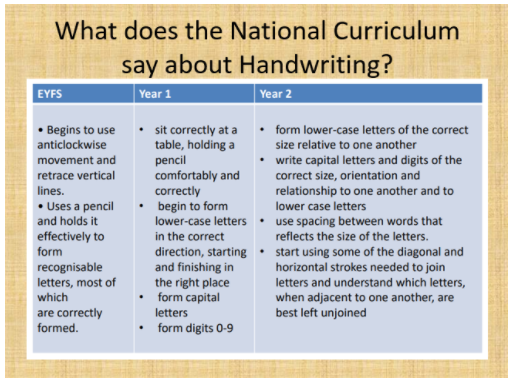
Handwriting is a fundamental skill that underpins children’s success across the curriculum. Getting it right from the very beginning is essential – from developing the core strength and posture needed for writing, to establishing an effective pen grip and accurate letter formation. Strong early habits build confident, fluent writers later on.
At our school, we use the Kinetic Letters programme, an evidence-informed approach that combines physical development, motor skills, and cognitive learning to help children form letters accurately and automatically. Kinetic Letters focuses on building strength, correct pencil grip, and clear letter formation before moving on to joining, ensuring children develop handwriting that is quick, legible and effortless.
We work closely with individual children to “get it right,” because fluent handwriting reduces cognitive load. This means that once handwriting becomes automatic, the brain is freed to think about the content of the writing rather than the mechanics of forming letters. Research also shows that writing information down by hand strengthens memory and retention due to the deeper processing involved in forming letters and organising ideas physically on the page.
What is Kinetic Letters?
Kinetic Letters is a structured handwriting programme for primary schools that develops the physical and cognitive skills needed for fluent writing. It is built around four key strands: Making bodies stronger, Holding the pencil, Learning the letters, and Flow and fluency.
The programme begins by strengthening core muscles, shoulders and arms so that children can control writing tools effectively. It teaches an efficient, comfortable pencil grip and introduces letter formation through large movements, multisensory activities, sand trays, and whiteboards before progressing to paper. 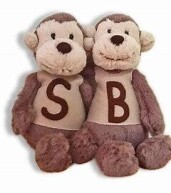
A unique feature of Kinetic Letters is the use of two monkeys, Bounce (the brave monkey who goes to the top branch) and Skip (the scared monkey who stays lower), who help children learn letter heights and positions in a fun, memorable way.
Letters are grouped into 'families' according to their movement patterns rather than alphabetical order, allowing children to learn more efficiently and accurately. As fluency develops, children progress towards joined handwriting with minimal, purposeful letter movements.
Pencil / Pen Grip - Tripod Grip
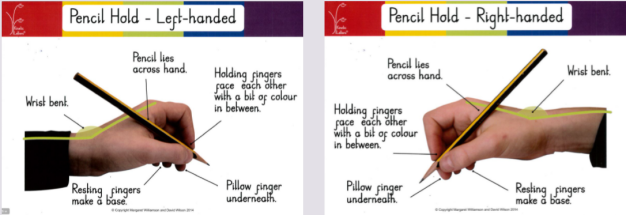

Holding the pen or pencil correctly is very important for comfort, control and long-term fluency.
We try and remember how to do this using 3 key words: Pinch. Flip. Grip.

Click here to watch a video on how to pick up and hold a pencil correctly using the tripod grip.
Remember – practice makes permanent, so if you see your child holding the pen or pencil incorrectly, please gently correct it.
Letter Formation
Good letter formation is the essential first step towards joining and joining helps fluidity.
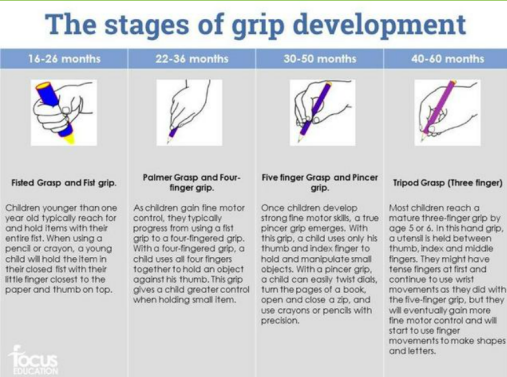
Kinetic Letters have grouped their letters into 5 main families as you can see below. In reception, we initially pre-teach kinetic letters in the sound-write order so that the ability to form letters does not impede phonics learning. It also helps us focus on pencil grip and correct early formation. Once all 26 single sounds have been taught, we move straight into the kinetic letters family order for pace, fluency and automaticity.
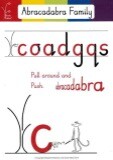
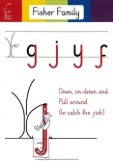
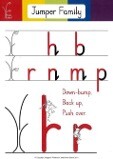
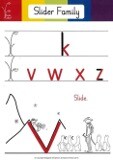
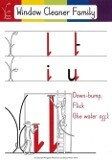
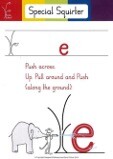
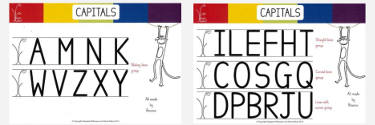
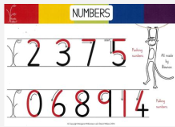
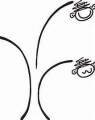 Monkey Tree - You will see children using a picture of a tree with two monkey faces. This helps the children to know where the letters should start on the page. Eventually, children do not need the image of the tree.
Click here to find a series of short videos showing how to form each letter correctly.
If you are unsure whether your child needs to practise a particular letter, please speak to your child’s class teacher.
We are here to help
We know that developing fluent, confident handwriting takes time, patience and practice and we are here to support every child on that journey. If you have any questions about handwriting, Kinetic Letters, or how to help your child at home, please speak to your class teacher or contact the school office.
We are always happy to help.
Please find below some helpful resources and attachments.